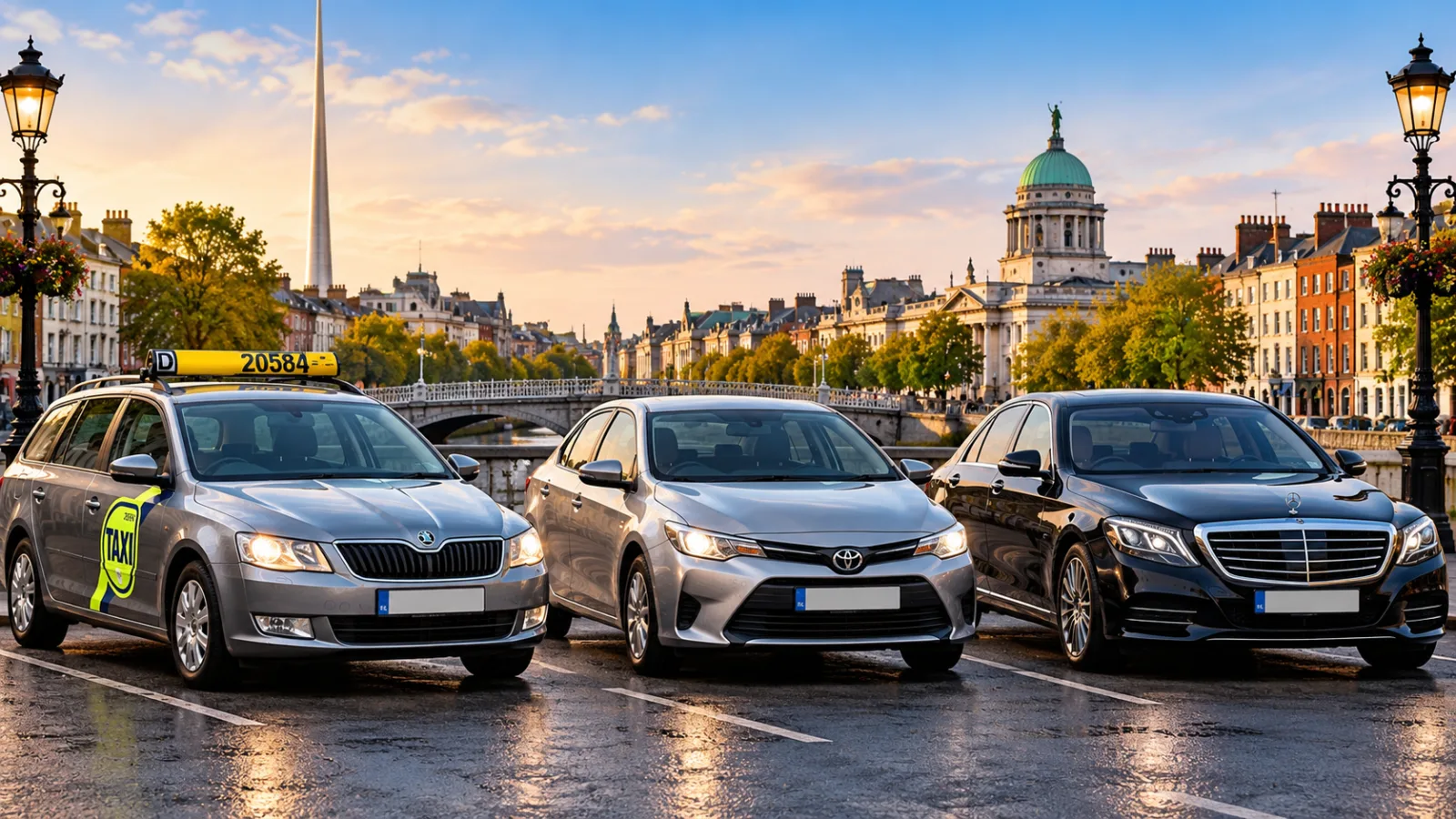
Taxis, hackneys and limousines are all small public service vehicles (SPSVs), licensed by the National Transport Authority (NTA). They work in different ways, so it's worth knowing the difference, whether you're a passenger or thinking of joining the industry.
Taxis
- Can be hailed on the street and can wait for passengers at taxi ranks.
- Must use a taximeter, charging no more than the national maximum fare.
- Display a roof sign.
Hackneys
- Must be pre-booked. They can't be hailed on the street or stand at taxi ranks.
- The fare is agreed in advance with the passenger.
- No taximeter or roof sign.
Local area hackneys
A type of hackney licence for rural areas that don't have enough taxi or hackney services, to help people in local communities get around. They also work on a pre-booked basis. The NTA publishes a separate manual for local area hackney operators.
Limousines
- Pre-booked only, usually for weddings, events and corporate work.
- May not have a taximeter, roof sign or branding, and may not use bus lanes.
- There is no maximum age for a limousine, which is why vintage cars can be licensed.
Wheelchair accessible vehicles
Taxis and hackneys can be licensed as wheelchair accessible vehicles. They must carry at least one wheelchair user plus another passenger, or at least three adults when no wheelchair is carried. New licences for these vehicles are encouraged, and grants have been available for electric wheelchair accessible vehicles.
The driver licence is the same
Whatever the vehicle, every driver needs an SPSV driver licence. Read our step-by-step guide on how to become a taxi driver in Ireland.